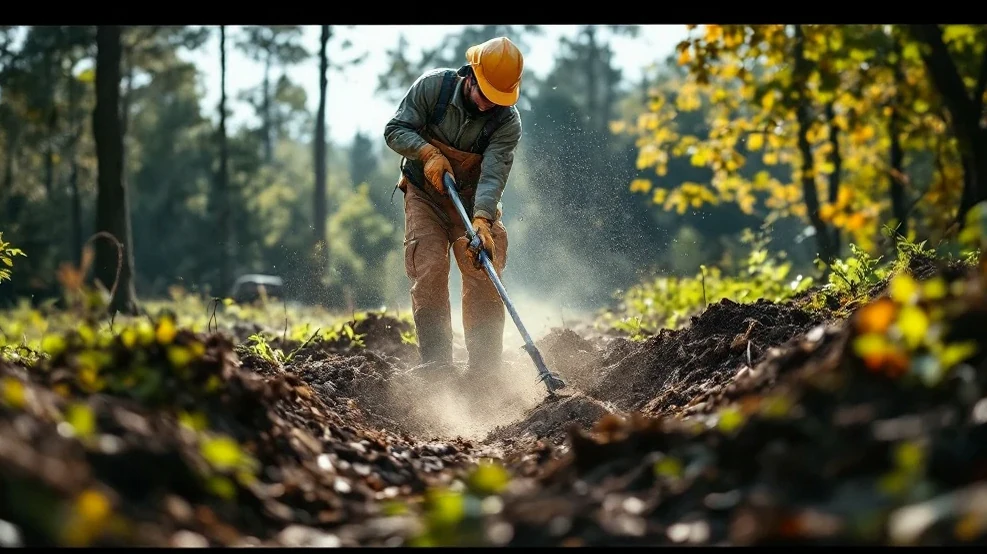
What is Forest Mulching & Brush Clearing and how does it work?
Forest mulching and brush clearing is a land management method that uses heavy machinery to grind trees, shrubs, and undergrowth into nutrient-rich mulch. Unlike traditional clearing, which removes debris, mulching leaves the shredded material on-site to decompose and improve soil health.
In Birmingham, this method is especially useful for overgrown lots, wooded properties, or areas where you want to clear land without stripping it bare. The mulch acts as a natural barrier against erosion and weeds while enriching the soil over time.
A specialized mulching machine, often a skid-steer or excavator with a mulching head attachment, does the work. The machine's rotating teeth shred everything in its path, small trees, thick brush, even stumps, into fine wood chips. The process is fast, efficient, and leaves no piles of debris to haul away.
This isn't the same as regular land clearing, where trees are cut down, hauled off, and the ground is left exposed. Forest mulching keeps the organic matter on-site, which is better for the environment and often cheaper since there's no need for dump trucks or burn piles.
Birmingham's clay-heavy soil benefits from mulching because the wood chips break down and improve drainage over time. If you've got a lot that's too overgrown to walk through, or you're prepping land for building without wanting a moonscape, mulching is a smart choice.
How Forest Mulching & Brush Clearing works, step by step
The process starts with an assessment of your property, followed by the mulching machine grinding everything into chips. The mulch is left in place to decompose naturally, improving soil quality without the mess of traditional clearing.
First, a crew walks your property to identify hazards like hidden stumps, rocks, or steep slopes. In Birmingham, we often find old fencing or buried debris in overgrown lots, so this step prevents equipment damage.
Next, the mulching machine goes to work. It's not like a lawn mower, this thing chews through saplings up to 6 inches thick and turns them into chips in seconds. The operator moves methodically, clearing swaths while leaving larger trees untouched if you want them.
Unlike bulldozing, which scrapes the land clean, mulching leaves a layer of wood chips several inches deep. This layer suppresses weeds, holds moisture, and slowly breaks down into compost. In Alabama's heat, that decomposition happens faster than up north.
After the job, your land will look like a park with a natural floor of mulch. If you're planning to build, the mulch can stay until you're ready to grade. If you're prepping for pasture, you might let it sit a season before planting grass.
Why Forest Mulching & Brush Clearing matters for your home
Mulching clears land without destroying topsoil, prevents erosion, and reduces fire risk, all while being faster and often cheaper than traditional clearing methods. For Birmingham homeowners, it's the best way to manage overgrown land responsibly.
Birmingham's heavy rains can wash away bare soil, especially on slopes. Mulch acts like a sponge, slowing runoff and keeping your land from turning into a mud pit. If you've got a creek or drainage ditch on your property, mulching the banks can stop erosion better than gravel.
Overgrown brush isn't just an eyesore, it's a fire hazard. Mulching removes the fuel while leaving the ground covered. In areas like Cahaba Heights or Bluff Park, where homes border woods, this can be the difference between a close call and a disaster.
If you're clearing land to build, mulching saves money. There's no hauling fee for debris, and you won't need as much topsoil later because the mulch preserves what's there. For farmland or hunting plots, the mulch feeds the soil naturally, so you spend less on fertilizer.
Some homeowners worry mulching looks messy at first, but within a few months, the chips start to blend in. If you're not in a rush, it's the most eco-friendly way to clear land. Even the Alabama Forestry Commission recommends it over burning or bulldozing in most cases.
Common problems and what causes them
The biggest issues with forest mulching come from uneven terrain, hidden debris, or not planning for regrowth. Knowing these pitfalls helps you avoid surprises and get the best results.
Steep slopes can make mulching tricky. If your land drops more than 30 degrees, the machine might struggle to grip, leaving patches uncut. In places like Red Mountain, we sometimes have to mulch in stages or use smaller equipment to avoid sliding.
Hidden rocks or old concrete chunks can damage the mulching head. Birmingham's older properties often have buried junk from decades ago. A walk-through with the crew beforehand helps spot these, but sometimes you don't know until the machine hits something.
Mulch doesn't kill roots, so some plants sprout back. Sweetgum and privet are the worst, they'll try to regrow from any leftover root fragments. A follow-up spray with herbicide might be needed if you want the area completely clear.
If the mulch layer is too thick, it can mat down and slow decomposition. More than 4 inches deep, and you might get a soggy layer that smells musty. The crew should adjust the machine to spread it evenly, not pile it up.
- Uneven results: Caused by skipping the pre-work inspection or rushing the job.
- Regrowth: Some plants (like kudzu) need extra treatment after mulching.
- Equipment damage: Hitting buried metal or rocks can cost downtime and repairs.
Common questions about Forest Mulching & Brush Clearing
Frequently Asked Questions
How long does forest mulching take?
For a typical half-acre lot in Birmingham, it's a one-day job. Larger properties or dense brush might take two to three days. Steep terrain or lots of obstacles can add time.
Will mulching kill all the trees?
No. The operator can avoid trees you want to keep. Mulching targets underbrush and small trees, but mature trees are left standing unless you specify otherwise.
Can I mulch in the winter?
Yes, and it's often easier. Dormant plants are less likely to regrow, and the ground is firmer for equipment. Just avoid mulching right after heavy rain when the soil is soggy.
Does the mulch attract termites?
Not usually. Termites prefer undisturbed wood, not shredded chips. If your home has a known termite issue, keep the mulch a few feet away from the foundation.
Can I plant grass right after mulching?
You can, but it's better to wait a few months. Fresh mulch ties up nitrogen as it decomposes, which can stunt new grass. For best results, let the mulch break down a bit first.
Is mulching better than burning?
Almost always. Burning releases smoke, risks spreading, and leaves the ground bare. Mulching is safer, faster, and improves the soil. Alabama's burn bans also make mulching more reliable.
What's left after mulching?
A layer of wood chips covering the ground, usually 2-4 inches deep. Any large stumps might remain if they're too big for the machine, but most everything else is turned into mulch.
Can I use the mulched area right away?
For walking or light use, yes. For heavy machinery or construction, you might need to grade the area first. The mulch compacts over time but starts out loose.
Need land clearing in Birmingham? Get a free estimate today.
📞 256-587-8568