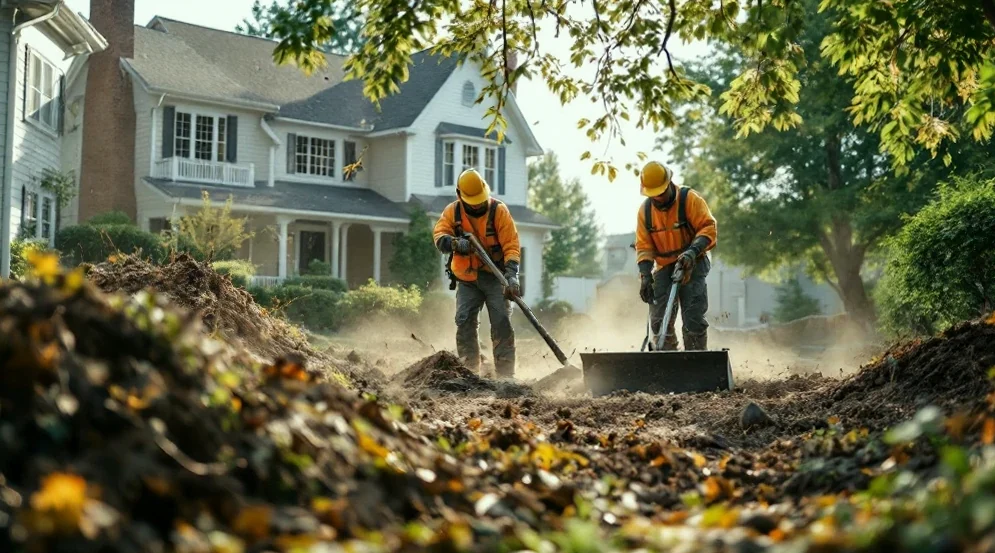
What is Commercial Land Clearing and how does it work?
Commercial land clearing is the process of removing trees, brush, stumps, and debris from a lot zoned for business use, making it ready for construction, parking, or other development. It works by sending in heavy equipment to cut, grind, and haul away everything, then grading the ground to a buildable surface.
If you own a commercial lot in Birmingham, you already know it's not the same as clearing a backyard. A commercial site is bigger, has stricter rules, and the work has to meet county and city standards before you can pour a foundation or lay asphalt. We handle that from start to finish, so you're not juggling three different contractors.
The work itself starts with a walkthrough. We look at what's on the lot, how thick the vegetation is, and where the property lines sit. That tells us what equipment to bring and how long the job will take. Then we get to work: cutting trees, grinding stumps, pushing brush into piles, and hauling it all off-site. What's left is a clean, graded pad ready for the next step.
Most commercial jobs in Birmingham fall into the $1,500 to $5,000 per acre range, depending on how dense the growth is and how rough the terrain is. (landclearingdb.com) Lightly vegetated land runs $500 to $1,200 per acre, while heavily wooded acres can cost $3,000 to $10,000. (meekslandmanagement.com) Those numbers give you a ballpark, but the only way to know your exact cost is a free on-site quote.
- Clearing removes trees, stumps, brush, and debris so the lot is ready for construction.
- Costs depend on vegetation density and terrain, with typical Birmingham jobs running $1,500 to $5,000 per acre.
- Heavy equipment rental runs $3,500 to $4,000 per day plus $1,000 for transport, which is why we bring our own machines.
- A free walkthrough gives you a firm number before we start.
Short version
- Commercial clearing is a full-site job, not a weekend project.
- Expect to pay $1,500 to $5,000 per acre for typical Birmingham lots.
- Heavy woods or steep slopes push costs toward the upper end.
- We handle clearing, stump grinding, and grading in one pass.
How Commercial Land Clearing works, start to finish
Commercial land clearing follows a set sequence: site assessment, permitting, clearing, stump removal, debris hauling, and final grading. Each step has a purpose, and cutting any of them costs you time and money later.
The first step is the site assessment. We walk the property, note the tree sizes, check for wet spots, and look at access points. A narrow gate or a power line overhead changes how we work. That walkthrough also tells us if we need a forestry mulcher or a dozer, which matters because equipment rental runs $3,500 to $4,000 per day with a $1,000 transport fee. (bamalandclearing.com) Since we own our machines, you don't pay that daily rental cost, and we pass the savings along.
Next comes permitting. Birmingham and Jefferson County have rules about clearing near streams, protected trees, and property lines. We handle the paperwork, but it's your responsibility to make sure the lot is zoned for what you plan to build. We can point you to the right office, but we don't do zoning.
Then the work begins. Our crew cuts down trees, grinds stumps below grade, and pushes brush into piles. On a typical commercial lot, we can clear several acres a day. The piles get loaded into dump trucks and hauled to a permitted disposal site. Nothing gets buried on your property, because that causes settling problems when you pave or build.
Finally, we grade the site. That means smoothing the soil so water drains away from your future building and the surface is level enough for footings or asphalt. Grading is what turns a cleared lot into a buildable one. We also rough in any access roads or parking areas you need.
The whole process usually takes a few days to a couple of weeks, depending on the acreage and how much is on it. We give you a timeline before we start, and we stick to it.
- Walk the site.We assess vegetation, terrain, and access to pick the right equipment and give you a firm quote.
- Handle permits.We pull any needed clearing permits from Birmingham or Jefferson County so you don't get fined.
- Clear the lot.Trees, stumps, and brush are cut, ground, and hauled away, not buried on site.
- Grade the ground.We level the soil and set drainage so your builder can start without surprises.
Why Commercial Land Clearing matters for your home
If you're building a home on a lot zoned commercial, or you own rental property, clearing that land right the first time saves you from foundation problems, drainage headaches, and permit delays. Bad clearing shows up later as cracked slabs and standing water.
You might be thinking, 'I'm a homeowner, why do I care about commercial clearing?' Here's the deal: some Birmingham neighborhoods sit on former commercial or mixed-use land, and if you bought a lot that was previously a business site, you're dealing with the same issues. Old foundations, buried debris, and compacted soil from years of parking can ruin a new build.
Proper clearing removes all that. We dig out old footings, pull out buried stumps, and take away trash that a previous owner might have dumped. If we just pushed dirt over it, your new house would settle unevenly within a few years. That's a repair bill in the tens of thousands, way more than the clearing cost.
Drainage is another reason. A cleared lot that isn't graded correctly will hold water after a Birmingham thunderstorm. That water seeps into your foundation, causes mold, and attracts mosquitoes. We grade the site so water runs away from your home, not toward it.
There's also the practical side: you can't get a building permit for a lot that's still covered in stumps and brush. The city wants to see a clean, graded site before they approve construction. We get you to that point, so your builder can start on schedule.
A clean, graded lot is the difference between a smooth build and a costly surprise.
Common problems and what causes them
The most common problems with commercial land clearing are buried debris, poor drainage, and permit violations. Each one comes from cutting corners, and each one costs you money down the line.
Buried debris is the big one. Some outfits push trees and stumps into a low spot and cover them with dirt. It looks fine for a month, then the wood rots and the ground sinks. Your parking lot cracks, your sidewalk heaves, and you're paying for repairs. We never bury anything; every bit of organic material goes to a disposal site.
Drainage problems start when grading is rushed. Water needs a path off your property, and if the grade is off by even a few inches, you get a pond where your driveway should be. We take the time to slope the ground properly, and we check it after rain before we call the job done.
Permit violations happen when a crew starts clearing without checking the rules. Birmingham has buffers around creeks and wetlands, and cutting trees in those zones can bring fines and stop-work orders. We pull the right permits and flag those areas before we start, so you don't get a surprise letter from the city.
Cost overruns are common when a contractor gives you a low bid, then hits you with extras for stumps or rock. We quote the whole job up front, and we stick to it. If we find something unexpected, like a buried car or a concrete slab, we tell you before we do the work, not after.
Standing water after rain
A low spot that holds water means the grade is off. Fix it before you pave or build.
Sinking or settling soil
That usually means buried debris is rotting. Dig it out now before it becomes a foundation issue.
Stop-work order from the city
If you cleared without a permit, call us. We can help you get compliant and back on track.
Frequently Asked Questions
How much does commercial land clearing cost in Birmingham?
Typical commercial clearing in Birmingham runs $1,500 to $5,000 per acre, depending on how thick the vegetation is and how rough the terrain is. (landclearingdb.com) Lightly vegetated land is cheaper, $500 to $1,200 per acre, while heavily wooded acres can hit $3,000 to $10,000. (meekslandmanagement.com) The only way to get an exact number is a free on-site quote.
Do I need a permit for commercial land clearing in Birmingham?
Most commercial clearing in Birmingham requires a permit, especially if you're near a creek, wetland, or protected tree line. We handle the permit process for you, but you're responsible for making sure your project meets zoning rules. We can point you to the right city office if you have questions.
How long does commercial land clearing take?
A typical commercial lot takes a few days to a couple of weeks, depending on the acreage and how much is on it. We give you a timeline after the walkthrough and stick to it. Weather can slow things down, but we plan for that.
What happens to the trees and brush after clearing?
We haul everything off-site to a permitted disposal facility. Nothing gets buried on your property. Burying organic material leads to settling and drainage problems later, so we don't do it.
Can you clear a lot that's steep or rocky?
Yes. Steep slopes and rocky ground just mean more time and possibly different equipment. That's why costs can run higher on those sites. We'll walk the property and give you a firm quote before we start.
Will you remove stumps too?
Yes, stump grinding is part of our standard clearing service. We grind stumps below grade so they don't interfere with construction or cause settling. If you only need stumps removed, we can do that as a separate job.
Do you handle grading and site prep?
We do. After clearing, we grade the site for proper drainage and a level building surface. That's what makes the lot ready for your builder or pavement crew.
What if I find buried debris or an old foundation on my lot?
We dig out old foundations and buried trash as part of the clearing process. If we find something unexpected, we'll show you and give you a price for removing it before we proceed. No surprise charges.
Sources
Need land clearing in Birmingham? Get a free estimate today.
📞 256-587-8568